

 April 19, 2026
How to Remove Dents
from Car at Home.
DIY Methods That Actually Work
Last updated: 19 April 2026. Reading time: 12 minutes.
Why you are reading this
You just noticed a dent. Before you decide whether to spend money fixing it, you want to know if you can sort it out at home with stuff you already have. Fair enough. A 20 minute DIY attempt costs you nothing. Getting the car to a studio and back takes half a Saturday.
The internet is full of dent DIY hacks. Hot water and a plunger. Hair dryer and canned air. Dry ice. Suction cups. Hot glue and a pin. Some of these work on some dents. Most of them do not work on most dents. Almost none of the blogs writing about these methods tell you which is which.
This guide is the honest version. Which DIY methods actually work in Indian conditions, which ones are internet noise, which ones can make the dent worse, and which dents are simply beyond DIY. Plus 2 uncomfortable realities that every Lucknow owner should know before starting. One involves your manufacturer warranty. The other involves what happens to your paint when you try the wrong method on the wrong panel.
By the end you will know exactly what to try, exactly what to avoid, and exactly when to stop and call a professional. No fear tactics. No upsell. Just the framework we wish every Lucknow owner had before reaching for the kettle.
1. The 3 things to check before you try any DIY method
Before you pour anything on your car, check these 3 things. They determine whether DIY will help or hurt.
Check 1. Is the paint intact
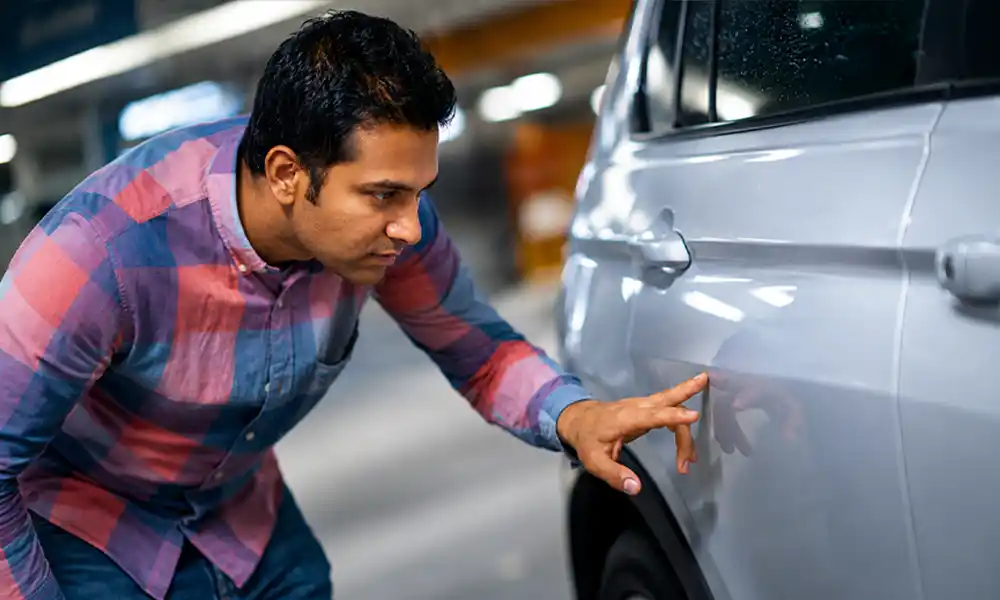
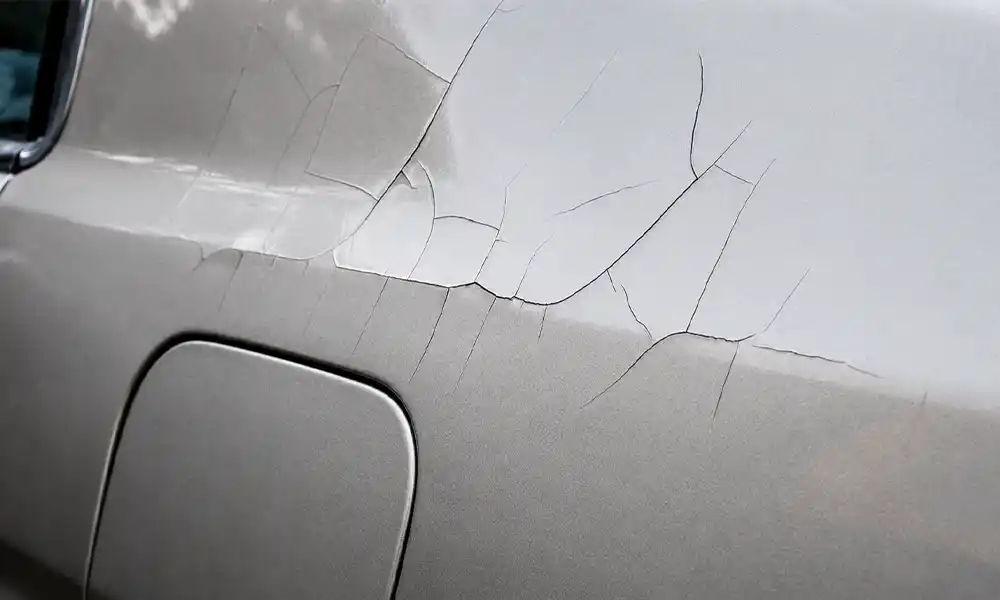
Run your fingernail across the paint surface over the dent. Does your nail catch on a crack, chip, or exposed metal. If yes, stop. No DIY method will fix a dent with paint damage. Any attempt will make the paint damage worse and turn a panel respray into a multi panel repair. If no, the paint is intact and some DIY methods may help.
Check 2. Is the panel plastic or metal
Bumpers front and rear on most modern Indian cars are plastic. Doors, fenders, bonnets, roofs, and quarter panels are metal. Plastic bumpers respond to heat methods because plastic softens and remembers its original shape. Metal panels do not soften at household temperatures and respond very differently. Using a plastic bumper method on a metal door is wasted effort. Using a metal dent method on a plastic bumper can crack it. Identify the panel material before choosing the method.
Check 3. Is the dent shallow or creased
Press gently on the dent with your finger. Does it have a smooth rounded bottom, or does it have a sharp crease or fold. Shallow rounded dents can respond to DIY. Creased dents almost never do. A crease means the metal has stretched beyond its elastic memory. No amount of heat or suction will bring a creased panel back to factory shape. Creased dents are always a professional job.
Only if all 3 checks are favourable should you continue. Any one of the 3 failing means DIY will not help you.
2. DIY Method 1. Hot water on plastic bumpers
This is the most reliable DIY method when it applies. Works on about 70 percent of shallow plastic bumper dents where the paint is intact.
When it works
Shallow dent on a plastic bumper. Front or rear. Paint completely intact. Dent is smooth and rounded, no sharp creases. The dent is in a location you can reach from behind the bumper.
What you need
A kettle or pot of boiling water. A bowl of cold tap water. Heat resistant gloves. Optionally a helper to hold the bumper from behind.
The process
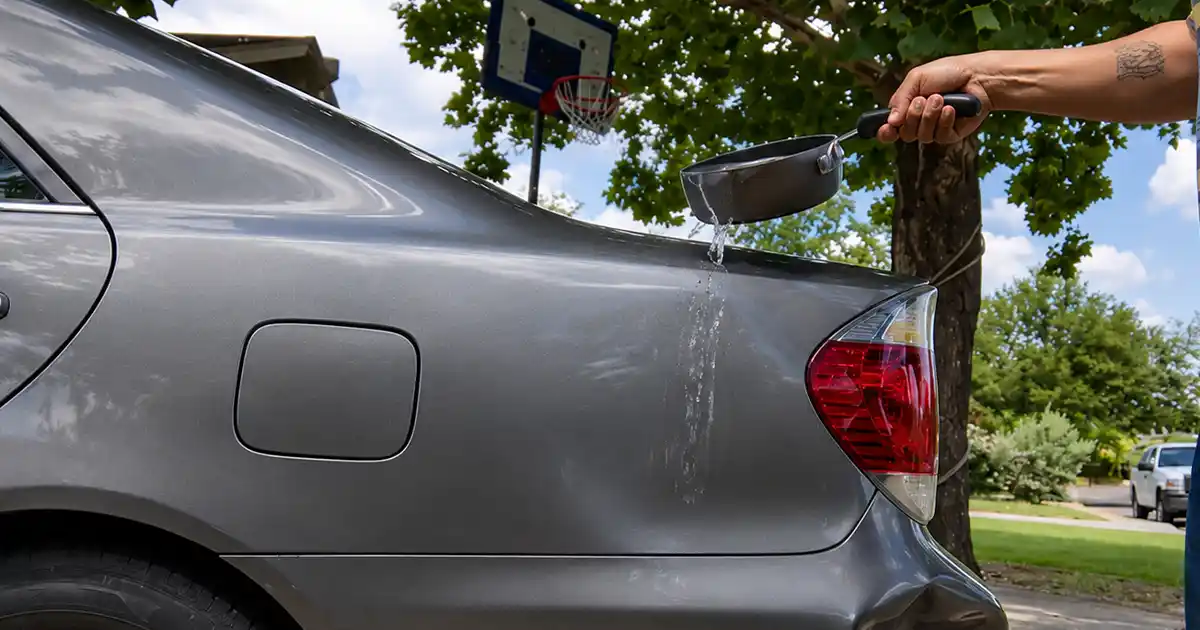
Move the car to a shaded area because direct sunlight affects the thermal response. Pour the boiling water slowly over the dent, covering the area completely. The plastic softens within 10 to 20 seconds. Immediately reach behind the bumper from inside the wheel well or under the car and push the dent out gently with your palm. Do not use a hard object. Your palm distributes pressure evenly which the plastic needs. Once the dent pops out, pour the cold water over the same area to lock the plastic in its restored shape.
What can go wrong
If the plastic is old and brittle, the boiling water can crack the bumper. Cars older than 8 years sometimes have this problem. If the dent has a hidden crease you did not see, the plastic will not spring fully back and you will be left with a softened but still deformed bumper. If you push with a hard tool rather than your palm, you create a reverse dent outward which is harder to fix than the original inward dent.
Lucknow specific note
In peak Lucknow summer when ambient temperature is already 40 plus, plastic bumpers are often close to their softening point just from the sun. Be extra gentle with the pressure because the plastic is more flexible than usual. In winter when ambient is 10 degrees at night, the plastic is stiffer and the boiling water cools faster, so you have a smaller working window. Best time to try this method in Lucknow is October or February when ambient is moderate.
Success rate
About 70 percent for the right kind of dent. 0 percent for metal panels.
3. DIY Method 2. Hair dryer and compressed air on small metal dents
The most over promised DIY method online. Works on a very narrow band of situations. Fails more than it succeeds.
The theory
Heat expands metal. Rapid cooling contracts metal. If you heat the dent with a hair dryer and then spray compressed air (held upside down so it releases as a super cold liquid) the sudden contraction supposedly pops the dent out.
The reality
This method works on tiny shallow metal dents on thin gauge steel panels like older Indian hatchback doors and fenders. It rarely works on modern cars with stiffer higher tensile strength steel. It almost never works on SUV panels which use thicker gauge metal. It does not work on aluminium panels found on many luxury cars.
When it has a chance
Very small metal dent, smaller than a 5 rupee coin. Shallow, with a rounded bottom. On a flat part of a door or fender, not near a body line or edge. On a 10 year old or older Maruti, Hyundai, or Tata that still uses thinner gauge steel.
What you need
A 2000 watt hair dryer or heat gun on low setting. A can of compressed air. Microfibre cloth. Gloves.
The process
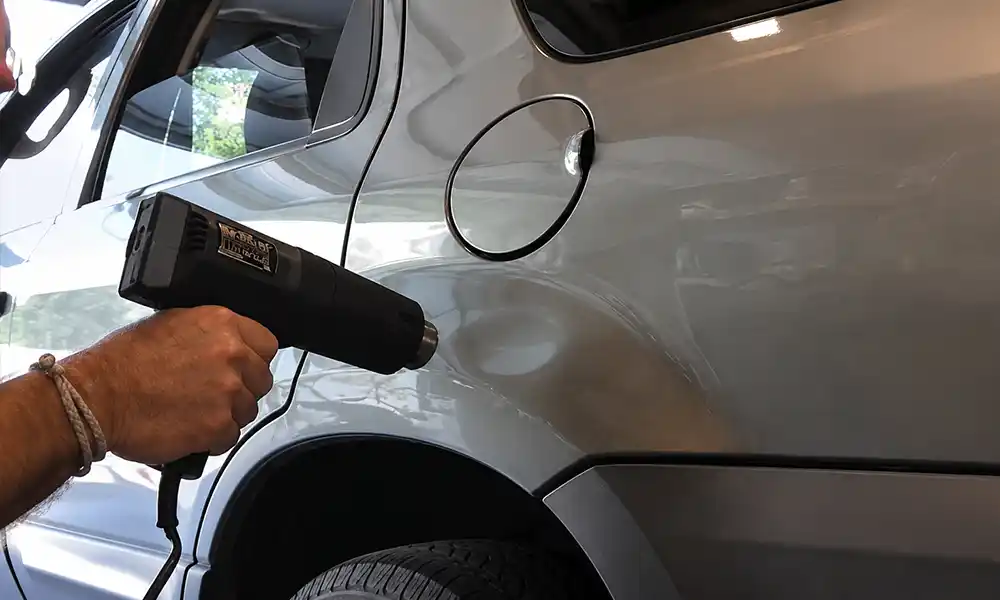
Heat the dent with the hair dryer from about 10 cm away for 2 minutes, moving constantly to avoid scorching the paint. The metal should feel warm to touch but not hot. Immediately flip the compressed air can upside down and spray directly on the heated dent for 10 to 15 seconds. The sudden cold should cause the metal to snap back. If it works you hear a small pop.
What can go wrong
Most commonly nothing happens at all and the dent stays where it is. Less commonly the paint clear coat gets damaged by the sudden temperature shock. Occasionally the dent partially pops but leaves an irregular high spot that is worse looking than the original dent.
The honest verdict
This method is where most Indian DIY blog posts lead people wrong. They make it sound reliable. It is not. Try it once. If it does not work on the first attempt, it is not going to work. Stop.
Success rate
About 20 percent on the right kind of dent. Most Lucknow cars on the road today do not qualify because modern Indian cars from 2018 onward use higher tensile steel that does not respond to household temperature changes.
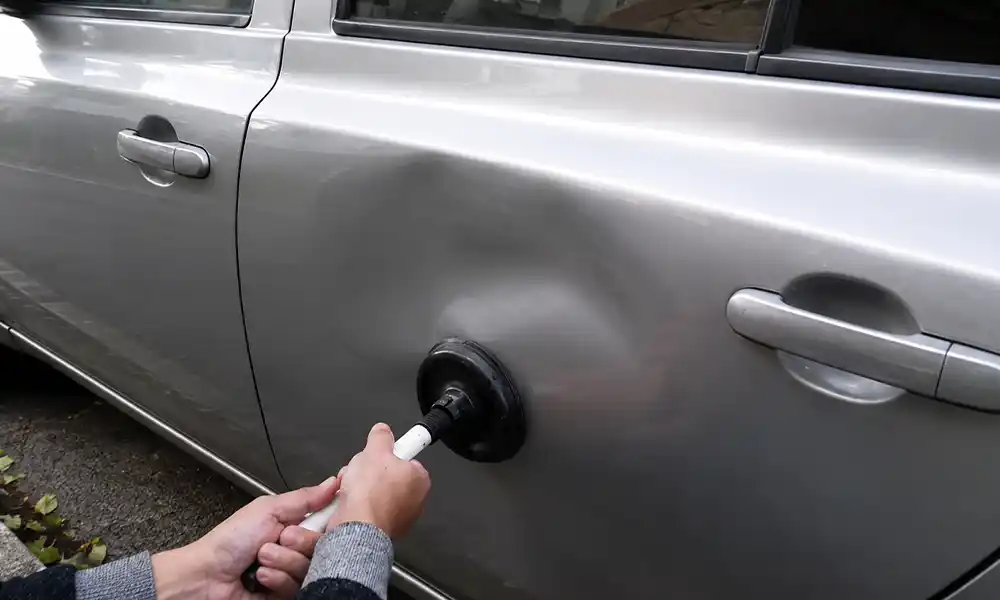
4. DIY Method 3. Plunger suction on shallow wide dents
The TikTok favourite. Works less often than the videos suggest but better than method 2.
When it works
A wide shallow dent, 8 cm or larger across. On a flat panel such as the centre of a door or the centre of a bonnet. On a non plastic metal panel. Paint completely intact. No creases.
What you need
A clean new cup style plunger from a hardware store. Do not use your bathroom plunger, hygiene and pressure seal both matter. Water. Optionally a bit of petroleum jelly around the plunger rim for a better seal.
The process
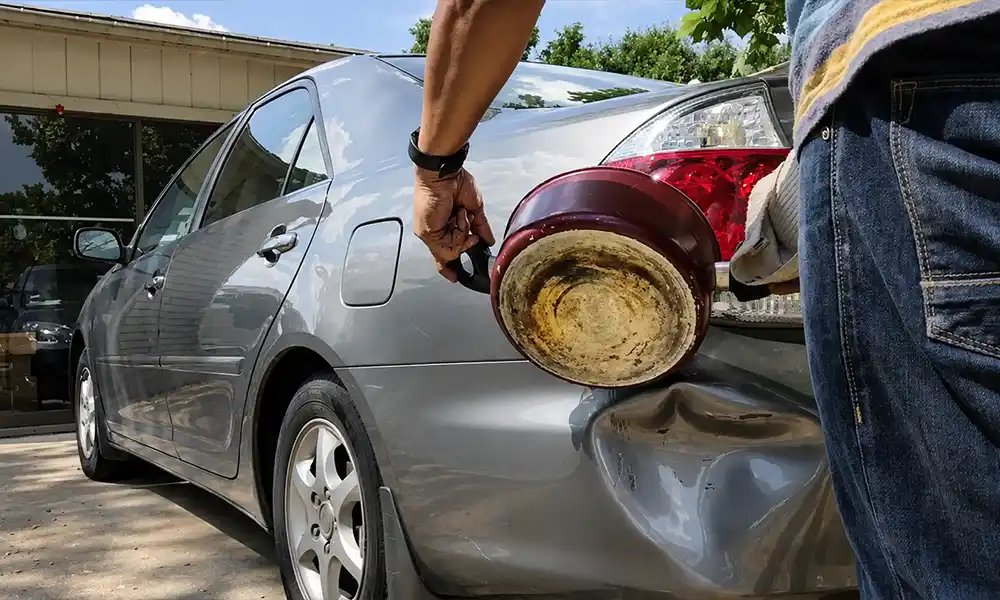
Wet the dent and the plunger rim. Apply a thin layer of petroleum jelly around the rubber rim of the plunger if the surface is not sealing well. Press the plunger firmly over the centre of the dent to create suction. Pull sharply outward. Repeat 3 to 5 times. If it is going to work, you will feel and hear the dent pop outward within the first 3 pulls.
What can go wrong
The plunger can scuff the paint if you drag it sideways while under suction. Pulling too hard can overcorrect and create a small outward bulge. On very small dents the plunger cannot create a good seal and you achieve nothing.
Where it rarely works
Dents on curved panels like fenders or bonnets with a strong contour. The plunger cannot form a proper vacuum on a curved surface. Dents near body lines or panel edges. Creased dents of any kind.
The honest verdict
Plunger works better than method 2 but only on the right dent type. The biggest risk is pulling too aggressively and creating an outward bulge that requires professional repair to fix. Go gentle.
Success rate
About 40 percent on the right kind of dent.
5. DIY Method 4. Dry ice thermal shock (why we avoid it)
Online blogs love this method. We do not recommend it.
The theory
Dry ice is frozen carbon dioxide at minus 78 degrees Celsius. The theory is that touching dry ice to a dent causes such rapid contraction that the metal snaps back to shape.
Why we do not recommend it in India
Dry ice is not readily available in most Indian cities including Lucknow. You have to order it from an industrial gas supplier and it sublimates within hours of purchase, so timing is tricky. Handling dry ice without proper insulated gloves causes frostbite in seconds. The success rate on dents is no better than method 2. The paint can crack under extreme thermal shock especially on older cars.
What blogs do not tell you
Many of the viral dry ice dent removal videos on YouTube are staged. The dents were pulled out professionally off camera and dry ice applied later for the reveal. The method almost never works on first attempt in real life.
Our recommendation
Skip this method. The risk to reward ratio is bad, the material is hard to source in India, and even when it works the result is often only partial.
6. DIY Method 5. Hot glue and pin puller kits
The most likely to succeed of the serious DIY options. Also the most likely to damage your paint if you get it wrong.
When it works
Metal dents, shallow to medium, on doors, bonnets, or fenders. Paint intact. Anywhere a plunger could work but for smaller or more contoured dents.
What you need
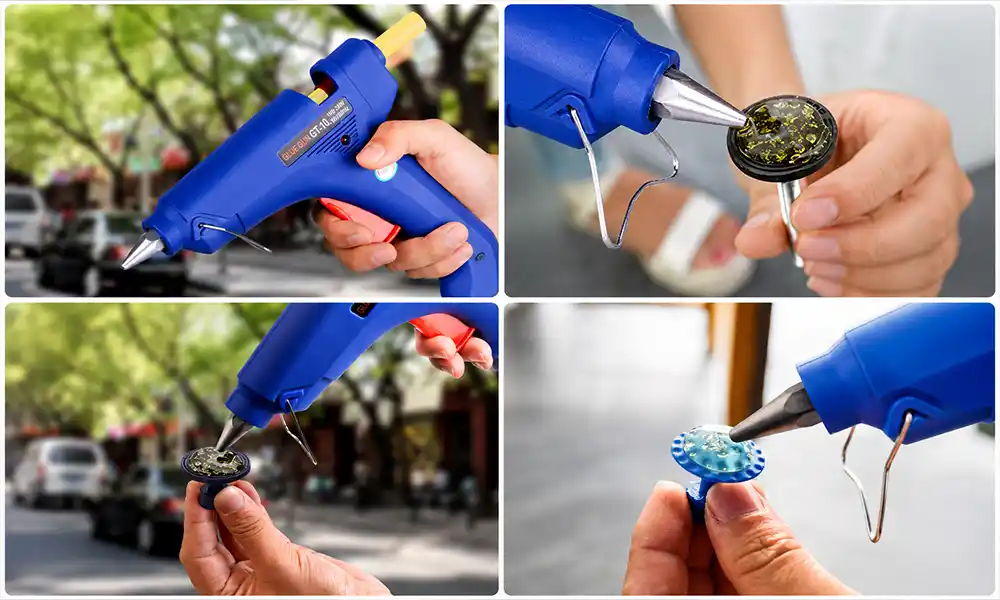
A dent puller kit from Amazon or any large auto parts retailer. These kits cost between 500 and 2000 rupees and include a glue gun, hot glue sticks, plastic tabs that stick to the car, and a slide hammer or bridge puller to pull the tabs outward. Good kits include tab removal solution for clean glue cleanup afterwards.
The process
Clean the dent area with rubbing alcohol so the glue adheres properly. Apply hot glue to the base of a plastic tab and stick it to the centre of the dent. Wait 2 minutes for the glue to set. Attach the slide hammer or bridge puller to the tab and apply slow outward pull pressure. The dent should rise. Work from the outside in, multiple tabs for a larger dent. Once satisfied, use the removal solution to release the glue without tearing the paint.
What can go wrong
This is the category where most DIY dent attempts go wrong. The glue can pull paint off the car if the paint is already weak or the surface was not properly cleaned. Pulling too hard creates a reverse bulge that is harder to fix than the original dent. Using the wrong glue (some kits use glue that is too strong for automotive paint) leaves residue that damages clear coat.
The honest verdict
Kit dent pullers can work, but they require patience and a willingness to accept partial success. A first time DIYer will probably get 60 to 70 percent of the way there, leaving a shallow depression that still shows in direct sunlight. A skilled PDR technician at Colomoto using professional tools can get the same dent to 99 percent. The gap is not the tools, it is the experience.
Success rate
About 35 percent to a satisfactory finish for a first time DIY user. About 60 percent to a noticeable improvement that is still visible in sunlight.
7. What DIY methods will never fix
Be honest with yourself. These dent categories are simply beyond home remedies.
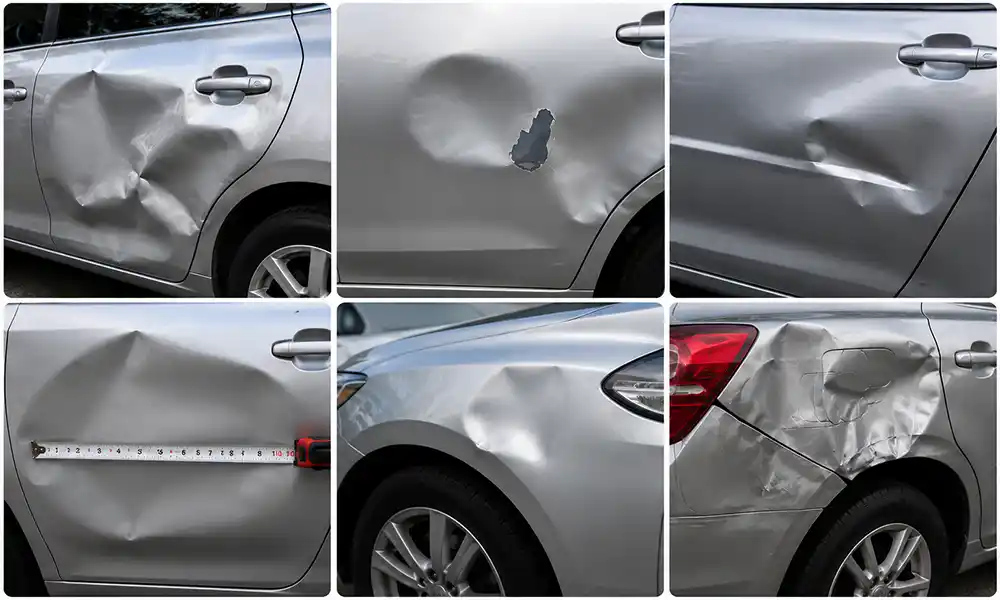
Dents with paint damage of any kind
Any chip, crack, or bare metal exposure means the dent needs paint work. No DIY method can fix paint. Attempting DIY on a paint damaged dent makes the subsequent professional repair more expensive because the damage spreads.
Creased dents
A crease or fold in the metal means the metal has been permanently stretched. No DIY technique can unstretch metal. Only proper metal work with professional dent pulling tools can restore creased panels.
Dents on body line edges
The raised character line that runs along the side of many modern cars, the edges where 2 panels meet, the corners of panels near lights. These locations are inaccessible to home methods and require tools that reach precise angles.
Dents on aluminium panels
BMW, Audi, some Mercedes, and luxury SUV bonnets use aluminium rather than steel. Aluminium does not spring back the way steel does. Any DIY method on aluminium usually makes the damage worse. These require specialist repair.
Dents larger than 15 cm
Anything larger than the size of a cricket ball is almost certainly beyond DIY. The force required to restore a large dent exceeds what home tools can safely apply.
Dents on double walled panels
Some roofs, some quarter panels, and some inner door panels have no accessible back surface. Without access from behind, no push method works.
If your dent falls into any of these 6 categories, do not waste a Saturday on DIY. It will not work and you risk making it worse.
8. 5 ways DIY goes wrong and damages the car
These are the outcomes we see regularly at the Colomoto studio from customers who tried DIY first. Avoid all 5.
- Paint cracking from thermal shock. Pouring boiling water on an already hot metal panel, or applying dry ice to a cold panel, cracks the clear coat. The cracks are invisible at first but expand over weeks and require a full panel respray.
- Outward bulge from overcorrection. Pulling too hard with a plunger or dent puller creates a reverse dent that is harder and more expensive to fix than the original.
- Paint peeling from hot glue. Cheap glue used in low quality dent puller kits adheres too aggressively to automotive paint. Removing the glue pulls the paint off. Panel respray becomes mandatory.
- Warranty void from improper technique. Some manufacturer warranties include a clause that DIY repairs void the factory paint warranty. If your car is still under warranty and you attempt DIY, you may lose the warranty coverage for that panel. Check your warranty terms before starting.
- Hidden damage to sensors or wiring. Modern cars have parking sensors, lane assist cameras, and other electronics embedded behind bumpers and panels. Aggressive DIY pushing can damage wiring you cannot see. A working bumper becomes a dead parking sensor system.
The common thread across all 5 is that the owner thought they were saving money. In each case the eventual professional repair bill was significantly higher than it would have been if the car had come in with the original untouched dent.
9. The 3 situations where you should stop and call a professional
Self awareness saves money. These are the 3 stopping points where the right call is to park the car and pick up the phone.
Situation 1. You tried once and it did not work
If the hot water method did not pop the bumper out on the first attempt, do not pour a second kettle. If the plunger did not lift the dent in 3 pulls, do not do 10 more. Repeated attempts at the same DIY method very rarely succeed where the first attempt failed, and each repeat increases the chance of damage.
Situation 2. The dent is larger or more complex than you first thought
Sometimes a dent looks small from a distance and turns out to be a shallow dent of 12 cm wide when you get close. Or it has a small crease you missed in the first inspection. The moment you realise the dent is out of the DIY category, stop.
Situation 3. The car has any value to you beyond daily transport
If the car is a BMW, Mercedes, Audi, Porsche, Fortuner, Thar, XUV700, or any car where the paint quality matters for resale or emotional reasons, DIY is not worth the risk even when it might work. The small cost saving is not worth the gamble on finish quality. Send it to Colomoto or any premium studio and have it done properly the first time.
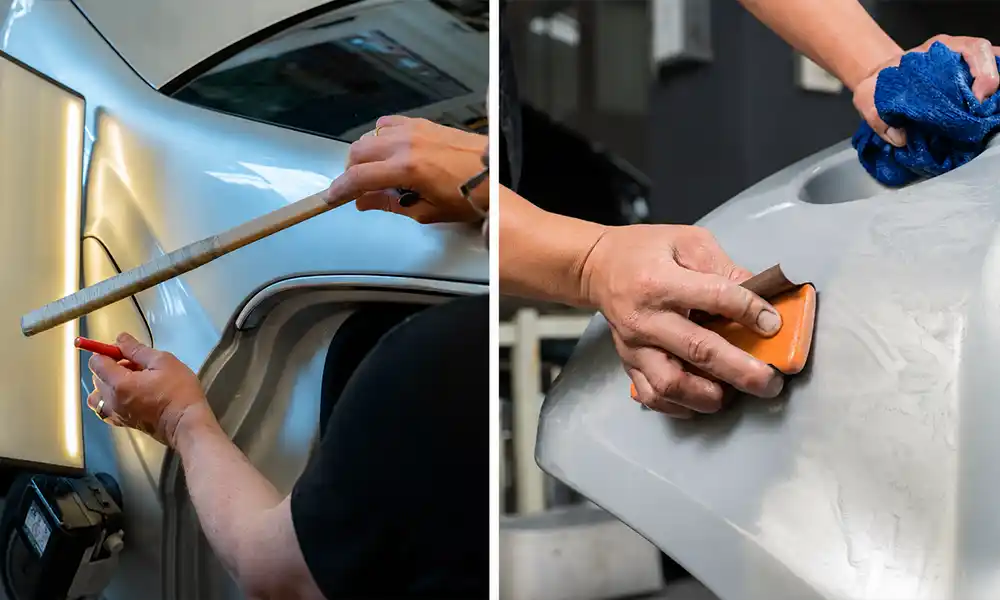
At Colomoto we see dents that were salvageable before DIY and irreversible after. We would rather see the dent before you touch it. Send 4 photos via WhatsApp to +91 7388800192 for a free preliminary assessment. For level 1 dents, our paintless dent repair gets the same result a DIY attempt aims for, with 99 percent accuracy and zero risk to your paint. Dent repair cost structure is covered in detail in our car dent repair cost guide.
10. Frequently asked questions
Yes for shallow dents without paint damage on plastic bumpers or thin gauge metal panels. Hot water works best for plastic bumpers. Dent puller kits work best for metal panels. Any dent with cracked or chipped paint, any creased dent, and any dent larger than 15 cm is beyond DIY and needs professional repair.
Hot water works on plastic bumpers with shallow smooth dents when the paint is intact. About 70 percent success rate on the right kind of dent. Hot water does not work on metal panels because car steel does not soften at water boiling temperatures. Pouring hot water on a metal dent achieves nothing.
A clean plunger used gently does not damage paint. A plunger dragged sideways under suction can scuff the clear coat. A plunger pulled too aggressively can create an outward bulge. Use a clean new plunger, wet the rim, pull straight outward, and stop after 3 to 5 attempts.
Not very. The method works only on tiny shallow metal dents on thin gauge steel, which most modern Indian cars no longer use. Success rate is about 20 percent. The method gets more attention online than its real world results justify.
Some manufacturer warranties include clauses that DIY paint and body work void the factory paint warranty. Check your specific warranty terms before attempting DIY on a car still under warranty. For a dent on a car within the first 3 years of purchase, professional repair that preserves the warranty is usually the better call.
Stop immediately. Do not try to correct the overcorrection. Each additional DIY attempt compounds the damage. Take the car to a premium studio and explain exactly what was attempted. At Colomoto we can fix most DIY induced damage, but the repair is easier and cheaper when we see it early rather than after 5 more attempts.
The better kits in the 1500 to 2500 rupee range can produce a 60 to 70 percent improvement on qualifying dents. The results are never as clean as a professional PDR service. For daily driver cars where 60 to 70 percent improvement is acceptable, kits are reasonable. For cars where finish quality matters, professional PDR is the better value even though the upfront cost is higher.
Hot water on a plastic bumper with a clearly shallow dent and intact paint. This method requires the least equipment, is easiest to control, and has the highest success rate of all DIY options. If the bumper dent meets these conditions, a first time DIYer can succeed. Any other method has significantly higher risk of going wrong.
Hot water method works slightly better in moderate temperatures (October or February) because the plastic is at its normal elasticity. In peak summer when ambient exceeds 40 degrees, the plastic is already soft and requires extra gentle handling. In winter mornings below 10 degrees, the plastic is stiffer and the boiling water cools faster, reducing your working window. Plan DIY attempts for morning or evening hours during moderate weather.
We strongly recommend against it. Luxury car panels often use aluminium rather than steel, use factory paint systems with low tolerance for DIY thermal shock, and cost significantly more to repair if the DIY goes wrong. Send a BMW or Mercedes dent to a premium studio every time. The small cost saving of a DIY attempt is not worth the risk on a car of that value.
Stop if the first attempt did not work. Stop if the dent turns out to be creased or larger than you first thought. Stop if you see any sign of paint cracking during your attempt. Stop if the dent is on a luxury car or a car under warranty. Stop if the dent is anywhere other than a plastic bumper or a flat metal door or fender.
Send 4 photos of your dent via WhatsApp to +91 7388800192 for a preliminary assessment and approximate price band within the hour. Or visit us directly at 323, Ahimamau, Sultanpur Road, Lucknow any weekday or Saturday between 10 AM and 7 PM for an in person inspection and free written quote.
Helpful resources
For further reading on dent removal techniques and owner experiences, these sources are useful.
Resources We Used
This guide is based on industry-standard knowledge, DIY dent repair best practices, and real world outcomes from the Indian market. Here are some trusted sources if you want to explore further:
- Team-BHP Indian owner DIY dent repair threads with photos and real outcomes, for seeing what worked and what did not across real Indian cars.
- Quora Real questions and answers about specific DIY methods from car owners across India, for the variety of real world experiences.
- Sikkens by AkzoNobel Manufacturer technical guidance on what DIY practices can damage automotive paint, for understanding the paint science underneath.
If DIY is not the right answer
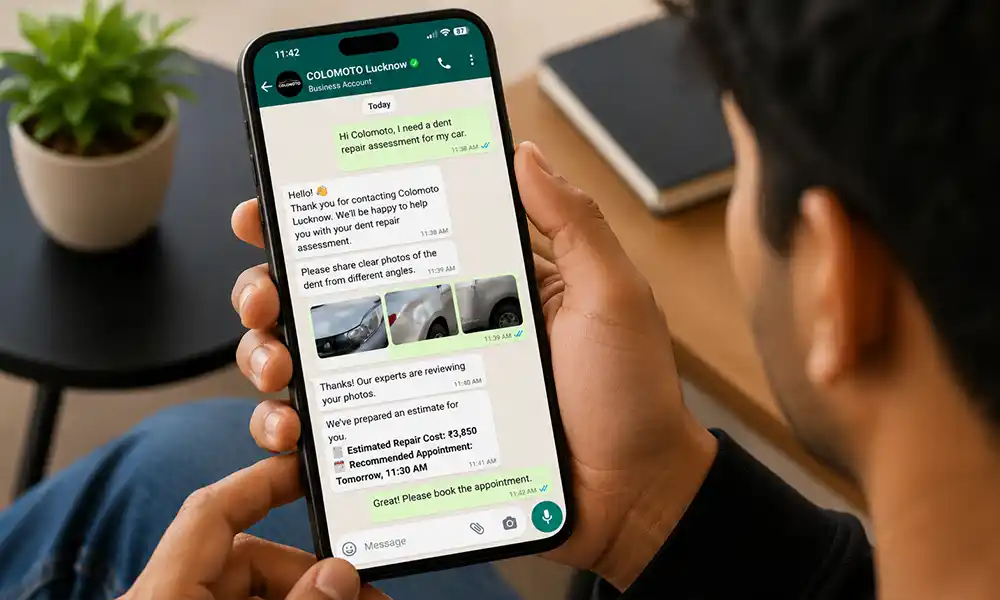
Send 4 photos of your dent via WhatsApp to +91 7388800192 for a free preliminary assessment. A minor dent may qualify for paintless dent repair at Colomoto with a same day turnaround and 99 percent finish quality. Visit us at 323, Ahimamau, Sultanpur Road, Lucknow for an in person inspection. Email info@colomoto.in with any questions.
