

 April 19, 2026
DIY Dent Repair vs
Professional Service.
When to Book the Pros
Last updated. 19 April 2026. Reading time. 12 minutes.
The decision every dented car owner faces
You are standing in your driveway looking at a dent. YouTube is open on your phone. A confident man in a denim shirt is demonstrating how to fix exactly this kind of dent with a plunger and boiling water. He makes it look effortless. The comments are full of people saying it worked for them.
Next tab. A Lucknow car studio website promising professional paintless dent repair. No prices on the site. A form asking for your phone number.
The decision feels simple. Save the money with DIY, or play safe with the pros. Most blogs tell you it depends. Which is true but useless. This blog tells you specifically when DIY is the right call, when professional is the right call, and why the answer changes based on 6 variables about your specific situation, not some generic rule.
By the end you will know which of 4 reader profiles you fit, what the honest total cost of DIY looks like including the risk of failure, and the single most underappreciated factor in this decision that almost no blog covers. The goal is not to push you one way or the other. The goal is to help you make the right call for your car and your life.
1. The 6 variables that should drive your decision
Every DIY versus professional conversation gets reduced to dent severity. But severity is only 1 of 6 variables that actually matter. Here are all 6, in order of importance.
Variable 1. Dent severity
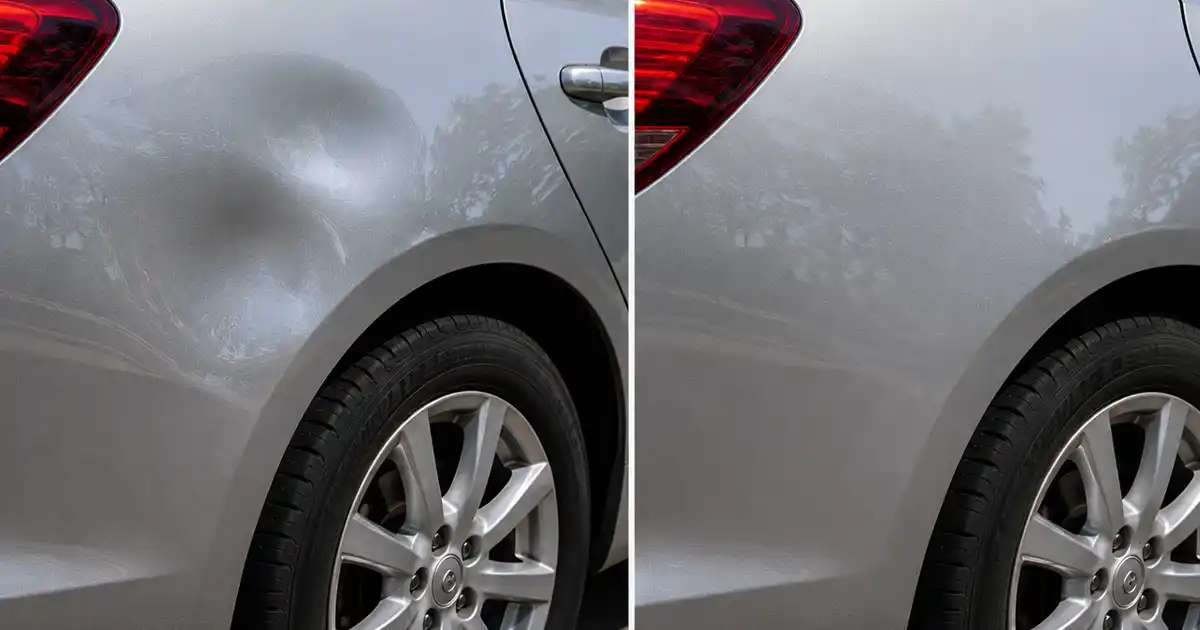
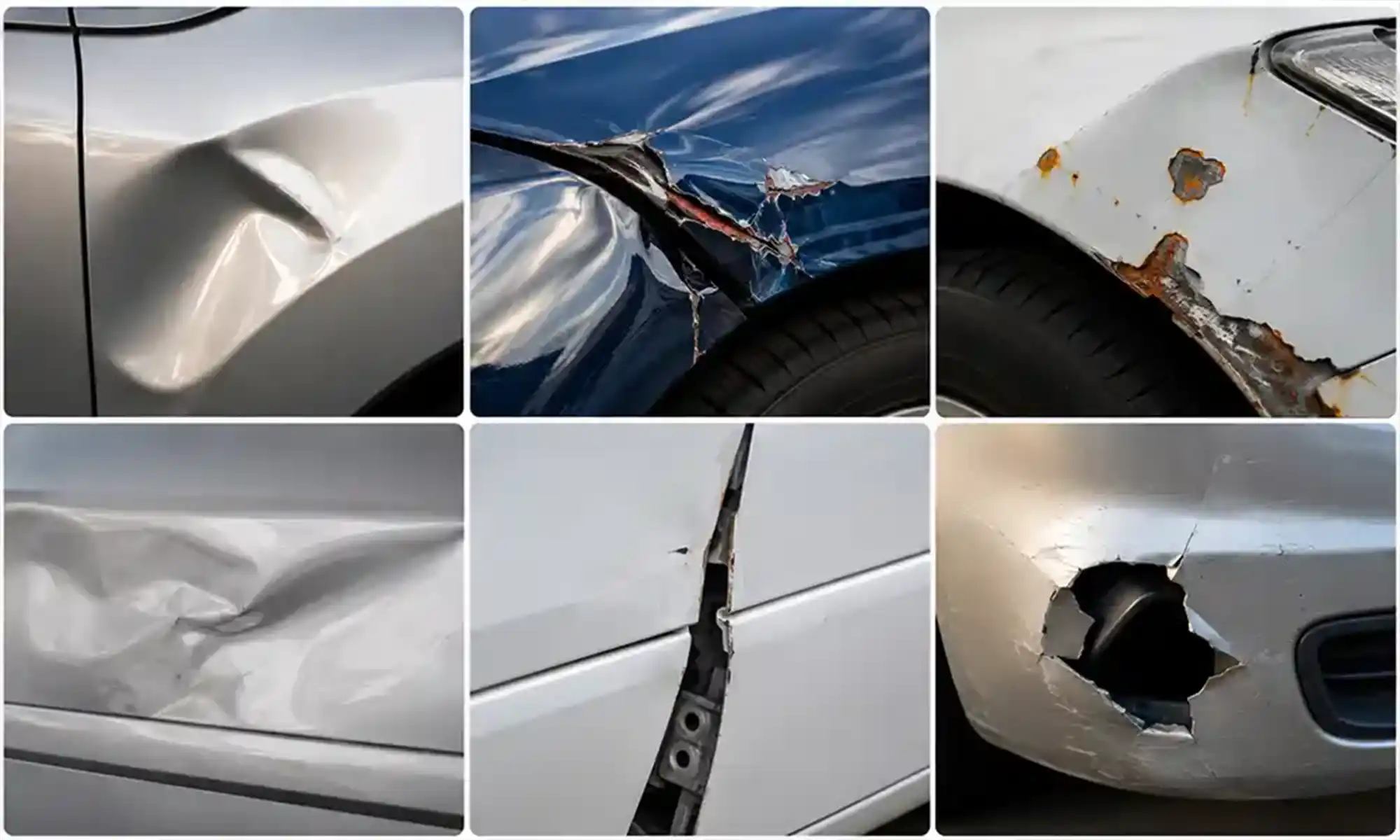
The most obvious variable. As covered in our car dent repair cost guide, dents fall into 4 severity levels. Level 1 dents without paint damage can be DIY candidates. Level 2 dents with minor paint disturbance are borderline. Level 3 and 4 dents are professional territory.
Variable 2. Car value
A 12 year old Maruti Swift and a 2024 BMW 5 Series should be treated differently even if the dent is identical. On the Swift, a 70 percent DIY success rate that leaves a small visible imperfection is acceptable. On the BMW, a 70 percent success rate that leaves a visible imperfection reduces resale value by amounts that dwarf the cost saving from DIY. The higher the car value, the more the resale impact of a failed DIY outweighs the labour saving.
Variable 3. Your time value
DIY dent repair is not free. It costs 2 to 6 hours of your Saturday for a first attempt, plus a return trip if the repair needs a second attempt. A professional in Lucknow can typically return the car same day for PDR or within 2 working days for traditional repair. If your hourly income exceeds 750 rupees, your 4 hour DIY attempt already exceeds the labour cost of professional PDR on most Level 1 dents. This is the single variable most Lucknow owners do not calculate.
Variable 4. Insurance implications
If you have comprehensive insurance with a high No Claim Bonus and the dent was caused by a third party, the right answer is often to claim insurance and let the insurer drive the repair decision. DIY on an insurance covered dent is actually worse than not claiming because DIY attempts can be documented during claim inspection and reduce the claim payout. If the dent is insurance coverable, DIY is usually the wrong call regardless of severity.
Variable 5. Your skill and tool confidence
A reader who has successfully repaired minor furniture damage, reupholstered a chair, or handled basic home maintenance projects will have better DIY outcomes than someone who has not. Your realistic assessment of your own manual skill matters. Most first time DIYers overestimate their own ability on the first attempt. Someone on their second or third DIY dent attempt has a much higher success rate than on their first.
Variable 6. The second attempt factor
If your first DIY attempt fails, the second attempt rarely succeeds where the first did not. More importantly, each failed attempt reduces the success probability of eventual professional repair because paint damage spreads. The expected cost of DIY must include a realistic weighted probability of needing professional repair afterwards. For Level 1 dents this is about 30 percent. For Level 2 dents this is about 70 percent. This factor changes the total cost maths significantly.
Most Lucknow owners only consider variable 1. If you consider all 6, the right answer becomes much clearer for your specific situation.
2. The true cost of DIY that most people do not calculate
The sticker price of DIY is just the tool cost. The true cost includes 5 other components that rarely make it into the decision.
Component 1. Tool cost
A basic dent puller kit from Amazon runs 1000 to 2500 rupees. A decent starter set with glue gun, plastic tabs, slide hammer, and removal solution costs around 2000 rupees. For hot water method the cost is zero if you already have a kettle.
Component 2. Time cost
3 to 6 hours for the first attempt including setup, the attempt itself, and cleanup. Double this if the first attempt fails and you try a second method. For someone earning 1500 rupees per hour of work, this is 4500 to 9000 rupees in opportunity cost on the first attempt alone.
Component 3. Weighted probability of failure
A first time DIYer has about 40 percent chance of achieving a satisfactory finish on a qualifying Level 1 dent. On Level 2 dents with minor paint disturbance, about 15 percent. On dents outside qualifying territory, essentially zero. The expected cost of DIY on a Level 1 dent factoring in the 60 percent chance of needing eventual professional work is significantly higher than the tool cost alone.
Component 4. Potential damage amplification
If DIY goes wrong in a way that creates new damage such as paint cracking from thermal shock, an outward bulge from overcorrection, or clear coat burn through from aggressive compound, the eventual professional repair is more expensive than it would have been without the DIY attempt. On average, a DIY attempt that goes wrong adds 30 to 50 percent to the eventual professional repair cost.
Component 5. Resale value impact
A visibly imperfect DIY repair reduces resale value by 3 to 8 percent compared to an invisible professional repair. On a premium car worth 20 lakhs at resale, this is 60,000 to 160,000 rupees of lost value to save a few thousand in labour on a single repair.
The honest total cost of DIY for a first time attempt on a Level 1 dent on a premium car.
Tool cost 2000 plus time cost 6000 plus weighted failure cost adjustment 4000 plus resale impact 30,000. Total effective cost around 42,000 rupees.
Compare this to professional PDR at a premium studio which might be in the range of 3000 to 5000 rupees plus zero time cost because the studio handles pickup and drop.
This maths is why the bargain hunter framing for DIY is often wrong. The true comparison depends on your car value and time value, not just the sticker tool cost versus the quote.
3. The true cost of professional repair beyond the quote
To be fair, the professional side has hidden costs too.
Hidden cost 1. Time coordination
Even with free pickup and drop, you still need to be available for the pickup, the initial assessment, and the final handover. This is usually 2 to 3 phone calls and minor coordination effort rather than full Saturday commitment.
Hidden cost 2. The premium over mass market studios
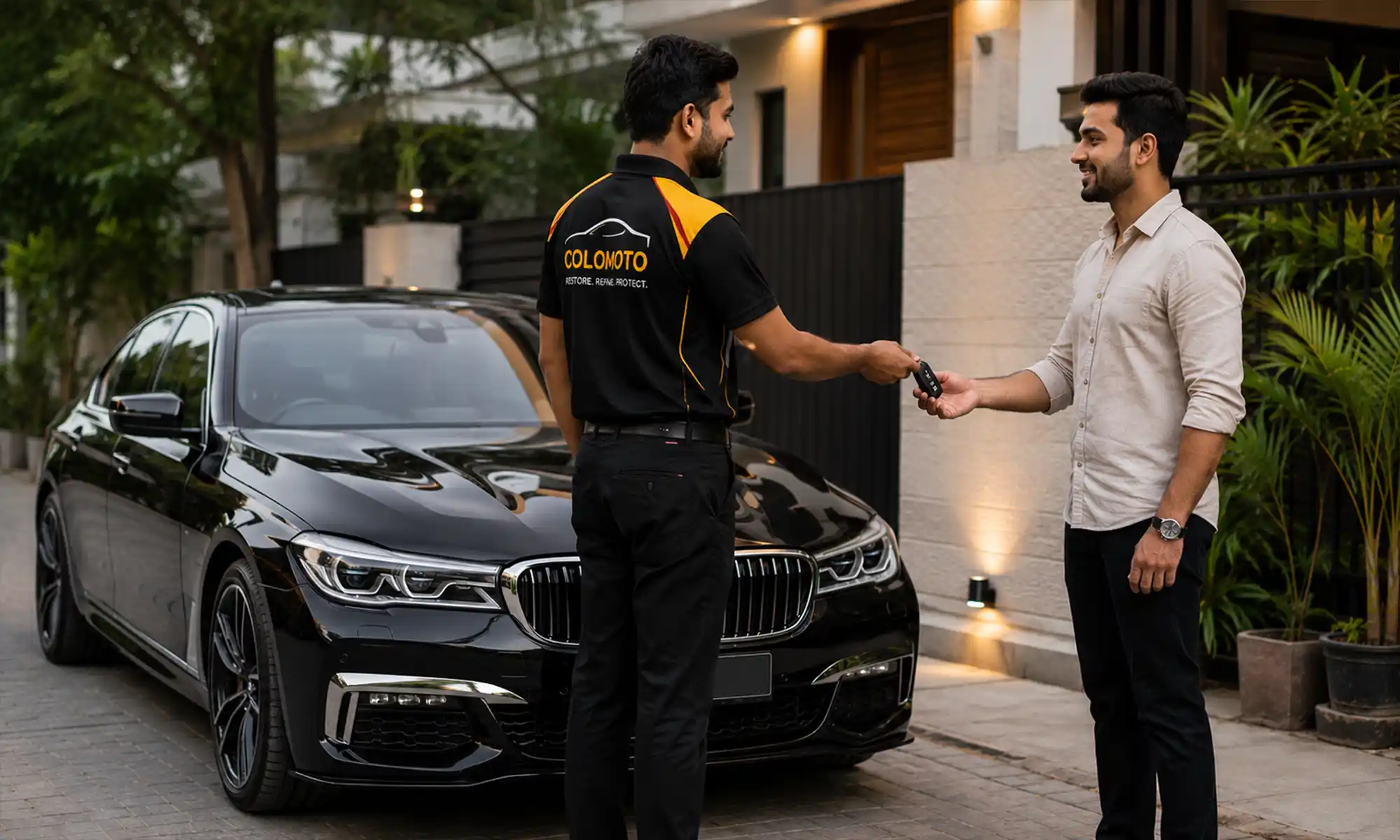
A premium studio like Colomoto costs 30 to 50 percent more than a local garage doing similar work. The premium covers dust free paint booth, international grade paint, computerised colour matching, trained technicians, 2 year warranty, and proper cure cycles. These are real value adds but they are a cost premium.
Hidden cost 3. Upselling risk
Some studios diagnose an additional issue during inspection that was not in the original quote. A 5000 rupee quote becomes a 12000 rupee bill. Premium studios with written quote policies do not do this. Mass market studios and some authorised service centres sometimes do.
Hidden cost 4. The emotional component
Some owners find handing over the keys for any repair emotionally uncomfortable. They want to stay in control. This is not irrational. It just needs to be weighted against the objective comparison.
The honest professional cost for a Level 1 PDR dent at Colomoto. Quote cost 3500 to 4500 rupees. Time cost 30 minutes of coordination. No hidden surprises because our quotes are written and binding. Warranty 2 years.
The practical math. For most Level 1 dents on premium cars, professional PDR is cheaper than DIY once all costs are counted. For Level 1 dents on older mass market cars where resale value is not a factor, DIY may still be cheaper overall if the owner has the time and confidence.

4. 4 reader profiles and the honest answer for each
Rather than a generic rule, here are 4 specific reader profiles with honest recommendations.
Profile 1. The bargain hunter
You drive a 5 to 10 year old hatchback or sedan. The car is used for daily commuting, not for display. Resale is a consideration but not a major one because the car is not in its first few years. Your time is valuable but you enjoy practical projects. You have some DIY experience with household repair.
Honest answer for Level 1 dents. DIY is the right call. The maths favours you and the resale impact of a slightly imperfect repair is small on an older daily driver. Use hot water method for plastic bumper dents and glue puller kit for metal panel dents.
Honest answer for Level 2 dents. Professional repair is the better call. The DIY success rate drops sharply here and the potential for amplified damage is high.
Honest answer for Level 3 and 4 dents. Professional repair, always.
Profile 2. The weekend experimenter
You enjoy working on the car as a hobby. The repair is not only about the end result but also about the satisfaction of doing it yourself. You have a garage with tools and you have watched enough YouTube to have confidence.
Honest answer for Level 1 dents. DIY, but invest in proper tools like a dual action polisher and a good PDR kit rather than improvising with household items. Your success rate is higher than average and the hobby value justifies the time.
Honest answer for Level 2 dents. DIY as a learning experience on an older car where the aesthetic result is not critical. Not on a car where perfect finish matters.
Honest answer for Level 3 and 4 dents. Professional repair. These require skills and equipment beyond hobbyist scale.
Profile 3. The busy professional
You drive a premium or near premium car. Your weekends are for family and rest, not for garage projects. You earn enough that your hourly time cost exceeds the cost of most professional repairs. You value consistent high quality outcomes.
Honest answer for every dent category. Professional repair. The time cost of DIY alone makes it uneconomical for this profile. Your car is likely valuable enough that resale impact from a failed DIY attempt is significant. Pickup and drop service makes professional repair frictionless for you.
Profile 4. The luxury car owner
You drive a BMW, Mercedes, Audi, Porsche, Land Rover, or equivalent. Your car is an expression of taste and is maintained as such. You want invisible repairs, factory paint preservation, and warranty coverage. You are willing to pay for quality.
Honest answer for every dent category. Professional repair, always, at a premium studio with proven experience on your specific brand. DIY on a luxury car is almost never the right call because the paint systems are more sensitive and the resale value preservation from professional work dwarfs any DIY cost saving. This is the one profile where DIY is not recommended for any dent category.
Identify your profile honestly and the answer for your specific situation becomes clear.
5. The DIY attempt ceiling. When success becomes statistically unlikely
Here is a framework most dent repair blogs do not surface. DIY success rates drop non linearly as dent characteristics change. Understanding the ceiling helps you stop before starting an attempt that is statistically a bad bet.
Dimensional ceiling
Dents under 3 cm diameter on plastic bumpers have about 70 percent DIY success rate with hot water method. Dents 3 to 7 cm drop to 50 percent. Dents 7 to 15 cm drop to 25 percent. Dents above 15 cm drop to under 10 percent. On metal panels the ceiling is lower. Plan your DIY only for dents under 8 cm on metal.
Paint condition ceiling
Dents with 100 percent intact paint have DIY viability. Dents with 1 to 5 percent paint damage (tiny chip or hairline crack) drop DIY success rate to under 20 percent. Dents with greater than 5 percent paint damage have effectively zero DIY success rate because DIY cannot repair paint, only metal.
Location ceiling
Flat centre panels have 60 percent DIY success. Body line edges have 20 percent. Corners and complex contours have 10 percent. Locations adjacent to trim, badges, or lights have under 10 percent because access is restricted.
Material ceiling
Traditional mild steel has the highest DIY viability. Modern high strength steel cuts success rate in half. Aluminium panels (common on BMW bonnets, Audi, luxury SUVs) have effectively zero DIY success rate for an untrained user because aluminium requires specific technique that household DIY methods cannot replicate.
The combined ceiling rule
If your dent fails any 2 of these 4 ceilings, DIY success probability is under 20 percent. If it fails any 3, under 5 percent. At those probabilities, DIY is a statistically bad bet and professional repair is the right call regardless of other variables.
This ceiling framework saves many Lucknow owners from wasted Saturdays and amplified damage.
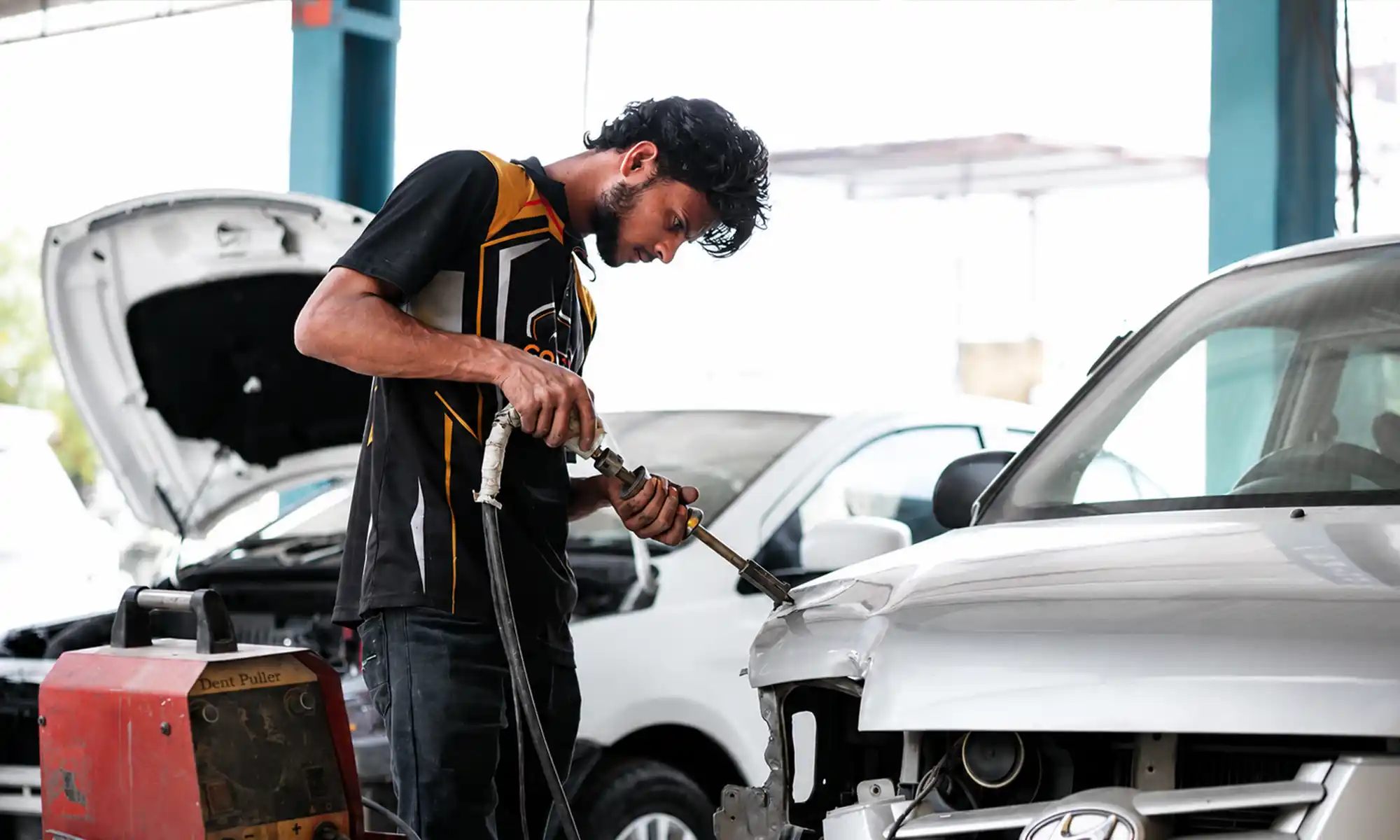
6. 3 hybrid scenarios where DIY plus professional saves the most money
This is a rare combination most blogs do not mention. In 3 specific scenarios, the cheapest total outcome comes from doing some DIY steps yourself and some professional steps at a studio.
Scenario 1. Multiple small dents across many panels
If you have 8 to 12 minor dents across the car from a hailstorm or a rough week of parking, professional PDR on all dents can run into significant cost. The hybrid approach. Use a plunger and hot water to self repair the 3 or 4 dents with the highest DIY success probability (shallow, flat panel, plastic bumper). Professional PDR on the remaining harder dents. Saves 30 to 40 percent of the total bill while getting professional quality on the difficult cases.
Scenario 2. Old car with budget constraint
You have an 8 year old daily driver. A single panel has a Level 2 dent. Full professional repair cost feels high relative to car value. The hybrid approach. DIY the metal repair yourself using a glue puller kit to get 70 percent improvement in the dent shape. Professional studio does only the paint work, not the metal work, at significantly lower cost because the prep is done. Saves 40 to 50 percent compared to full professional repair while still getting professional quality paint.
Scenario 3. Cosmetic touch up on a future sale car
You plan to sell the car in 4 to 6 months and want it presentable but do not want to spend full repair money on a car you are about to hand off. The hybrid approach. DIY touch up pen for Level 2 and 3 scratches and small dents to protect the paint from rust. Professional PDR only on the 2 or 3 most visible dents that would most impact sale price. Saves 50 to 60 percent while still protecting resale value.
These hybrid scenarios require an honest studio that is willing to do partial work. Not every studio accepts partial work because the revenue per job is lower. Colomoto accepts hybrid repair scenarios because we prefer a satisfied long term customer over a one time full invoice. Bring the car for an honest assessment and we will tell you which hybrid approach fits.

7. What YouTube DIY content does not show you
Every owner considering DIY has watched a YouTube video of a confident technician popping out a dent. A few things those videos never show.
They do not show failed attempts
A 10 minute video showing a successful DIY repair is usually the 4th or 5th attempt that went well. Takes 1 through 4 failed, partially fixed, or made it worse. Those failures are not in the video. The success rate implied by the video is far higher than the actual success rate on the specific channel.
They do not show the post repair inspection under sunlight
The "successful" repair shown under workshop lighting often looks very different under noon sunlight. Ripples, low spots, and transition zones that are invisible under LED become visible in daylight. YouTube creators rarely film the sunlight inspection because the results are not marketing friendly.
They do not show the learning curve
The technician in the video has done this hundreds of times. The subtle hand position, the exact pressure, the right moment to stop pulling are skills that take practice. Your first attempt will not look like theirs no matter how carefully you follow the steps.
They do not show the car context
The car in the video is often a specific model that the technician has worked on dozens of times and knows the exact metal thickness and paint behaviour for. Your car may behave differently. Generic YouTube technique does not account for your specific panel material.
They do not show the tool selection
A 5 minute DIY video shows 3 tools. A real DIY attempt on a complex dent needs 8 to 12 tools in different sizes and shapes to handle the full repair sequence. The tool simplification in videos sets unrealistic expectations.
They do not show the cost of a failed attempt
The video ends with the successful repair. It does not show the cost if the same attempt had gone wrong. That cost is what the viewer does not see and does not factor into their own confidence.
This is not to say YouTube DIY content is dishonest. It is to say the viewer is seeing a curated version of a complex repair and is likely overestimating the success probability for their own attempt.
For honest DIY guidance specific to Indian cars and Lucknow climate, see our how to remove dents at home guide which covers realistic success rates per method.
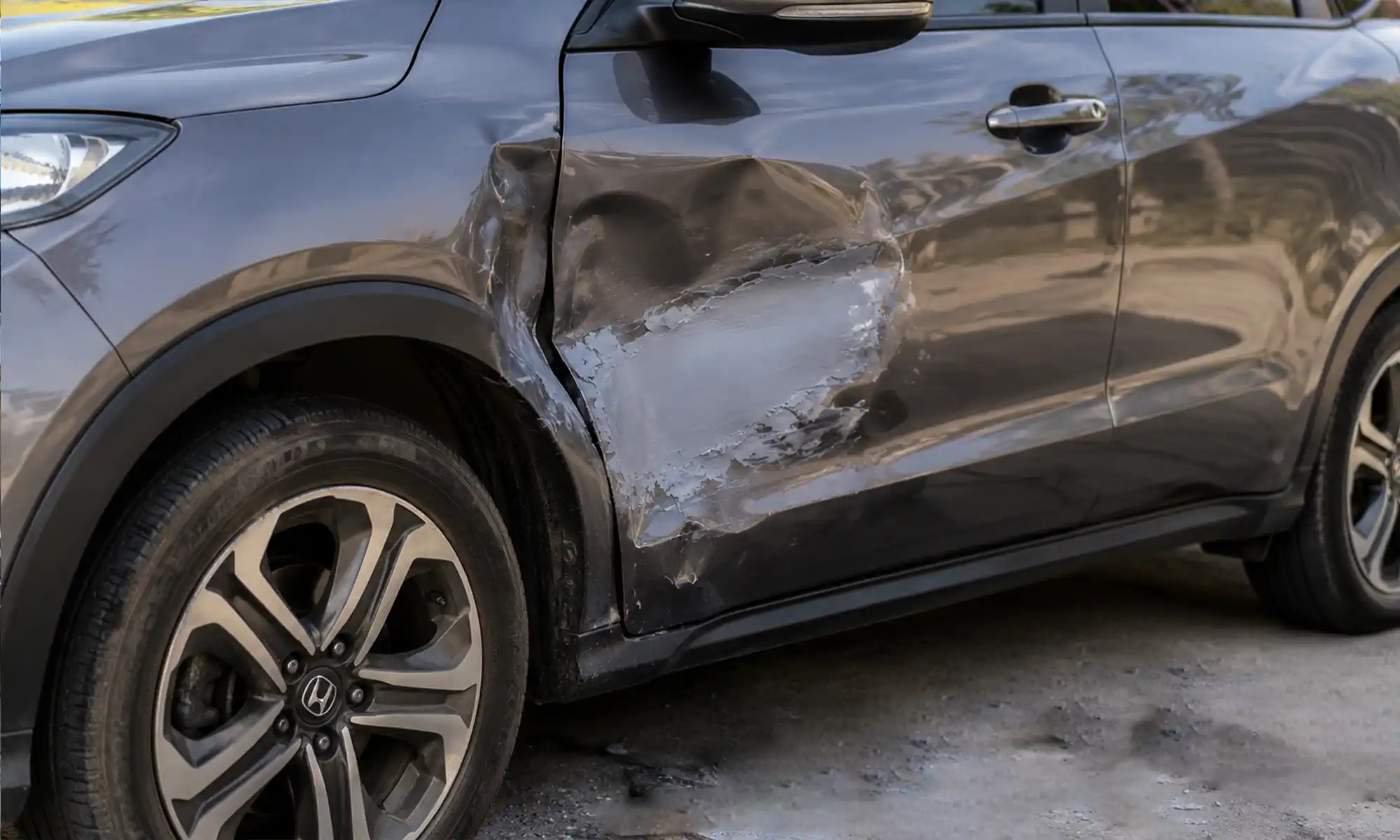
8. The 5 questions to ask yourself before picking up a tool
5 honest questions. If you cannot answer all 5 confidently, you are probably better served by professional repair.
Question 1. Have I classified my dent accurately using the fingernail and visual test
If you have not formally checked whether the dent is Level 1 or Level 2 or Level 3, you are starting blind. The classification takes 30 seconds and determines whether DIY is even feasible.
Question 2. Have I confirmed my car value and resale plans
Old daily driver and luxury car have very different DIY maths. If you do not know whether your car is worth 5 lakhs or 25 lakhs at resale and whether you plan to sell in 2 years or 8, you cannot evaluate the cost tradeoff.
Question 3. Is the dent insurance coverable and if so have I decided about claiming
If comprehensive insurance can cover this dent and the repair cost exceeds your NCB reset threshold, DIY is almost certainly the wrong call. You should either claim the insurance or make a considered decision not to claim.
Question 4. Do I have a realistic assessment of my own skill
Be honest with yourself. If you have never successfully completed a similar manual project, your first attempt success rate is 20 to 30 percent. If you have done comparable projects before, your rate is 50 to 70 percent. If you are unsure, assume the lower end.
Question 5. What is my plan if the first attempt fails
A realistic plan is to stop after the first attempt, accept the outcome, and book a professional. An unrealistic plan is to try method 2 and method 3 and method 4 on the same dent. Unrealistic plans lead to amplified damage. If you do not have a clear stopping rule, skip DIY entirely.
Answer all 5 honestly before starting. The effort saves time and money.
9. The Colomoto position on DIY customers
Here is the honest view from inside the studio. We see DIY attempts every week. Our position is specific.
We encourage DIY where it is appropriate
For Level 1 dents on older cars where the owner has reasonable confidence, we tell owners to try hot water or a glue puller kit first. If the attempt succeeds, good. If it fails or you are not happy with the result, we are here and the dent is usually still fixable at slight additional cost from the attempt.
We discourage DIY where it is clearly the wrong call
For Level 2 and 3 dents on premium cars, DIY statistics are bad enough that we will explicitly advise against it. We do this even though failed DIY attempts would bring us more revenue. The right call for the customer is our priority.
We will diagnose DIY attempts honestly
If you have already attempted DIY and are now considering professional repair, bring the car in for an honest assessment. We will tell you exactly what the DIY did and did not accomplish, what the repair path from this point looks like, and what the cost implications are. No blame, no upsell. Just honest assessment.
We offer hybrid repair scenarios
If the right answer for your specific situation is to DIY some parts and have us do others, we will structure the repair that way. We prefer a long term customer relationship over a maximised single invoice.
We respect the customer's decision
If you decide DIY is your path and later decide it was the wrong call, we are still happy to help. No "told you so". The car is the priority.
Visit us at 323, Ahimamau, Sultanpur Road, Lucknow. Call or WhatsApp on +91 7388800192. Email info@colomoto.in. Send 4 photos of your dent via WhatsApp for a free preliminary assessment and an honest DIY versus professional recommendation.
10. Frequently asked questions
On sticker cost yes. On total cost including time, weighted failure probability, and potential resale impact, DIY is often similar to or more expensive than professional repair for Level 1 dents on premium cars. DIY is genuinely cheaper only for Level 1 dents on older daily drivers where time is not costed and resale impact is minimal.
Call a professional when the dent is Level 2 or higher, when the car is a luxury or premium brand, when the dent is on a body line or panel edge, when you lack DIY confidence from past projects, when time cost exceeds the professional labour cost, or when the dent is insurance coverable.
A visibly imperfect DIY repair reduces resale value by 3 to 8 percent compared to an invisible professional repair on the Lucknow used car market. For a car worth 15 lakhs at resale, this is 45,000 to 120,000 rupees of lost value. A successful DIY repair with no visible imperfection has no resale impact.
Yes. Common DIY damage includes paint cracking from thermal shock, outward bulges from overcorrection, clear coat burn through from aggressive compound, and paint peeling from cheap hot glue. About 25 percent of first time DIY attempts create new damage that increases the eventual professional repair cost.
Paintless dent repair is a professional technique using specialised rods, glue pulling tools, and reflection boards to restore dent shape without any paint work. PDR success rate on qualifying dents is 95 percent compared to 40 percent for equivalent DIY attempts. PDR preserves factory paint which DIY often does not. For Level 1 dents without paint damage, PDR is almost always better than DIY on any car worth more than 8 lakhs.
PDR takes 30 minutes to 2 hours for most qualifying dents, same day turnaround. Traditional repair takes 2 to 5 working days for a panel level job. Most Colomoto PDR customers drop the car in the morning and collect it by evening.
The 4 profiles are the bargain hunter (older daily driver), the weekend experimenter (enjoys DIY as hobby), the busy professional (values time over money), and the luxury car owner (premium brand, wants invisible results). Match your car, time value, and priorities against the profiles. Most Lucknow owners fit cleanly into one.
Usually not. If your dent is covered by comprehensive insurance and exceeds the NCB reset threshold, claiming is cheaper than DIY or out of pocket professional. DIY on an insurance coverable dent is usually the worst of all options because it uses your time, costs tool money, and can compromise the claim if diagnosed during inspection.
Stop after the first attempt. Further attempts compound damage. Book a professional studio and disclose exactly what was attempted. A good studio can usually reverse DIY damage at slightly higher cost than the original repair would have been without the attempt.
Yes. If the right answer for your specific situation is DIY on some parts and professional on others, Colomoto structures the repair that way. We prefer long term customer relationships over single invoices. Bring the car for an honest assessment and we will design the right approach.
Level 1 dents with PDR typically cost in the low 4 figure range. Level 2 dents with panel repair run in the mid 4 figure to low 5 figure range. Level 3 and 4 dents run in the mid 5 figure range or higher. Detailed pricing is in our car dent repair cost guide.
Call or WhatsApp on +91 7388800192. Email info@colomoto.in. Send 4 photos of your dent via WhatsApp for a preliminary assessment and honest recommendation. Or visit us directly at 323, Ahimamau, Sultanpur Road, Lucknow any weekday or Saturday between 10 AM and 7 PM for an in person inspection and free written quote.
Helpful resources
For further reading on DIY versus professional dent decisions, these sources are useful.
Resources We Used
This guide is based on industry-standard knowledge, real world repair outcomes from the Indian market, and honest assessment from the Colomoto studio. Here are some trusted sources if you want to explore further:
- Team-BHP Indian owner experiences comparing DIY and professional dent repair outcomes, for real world stories from both paths.
- Dent Advisor Technical analysis of dent repair options and limitations, for understanding the engineering constraints on both approaches.
- Sikkens by AkzoNobel Paint system manufacturer documentation on paint damage from improper technique, for understanding why DIY technique matters.
Ready for an honest recommendation
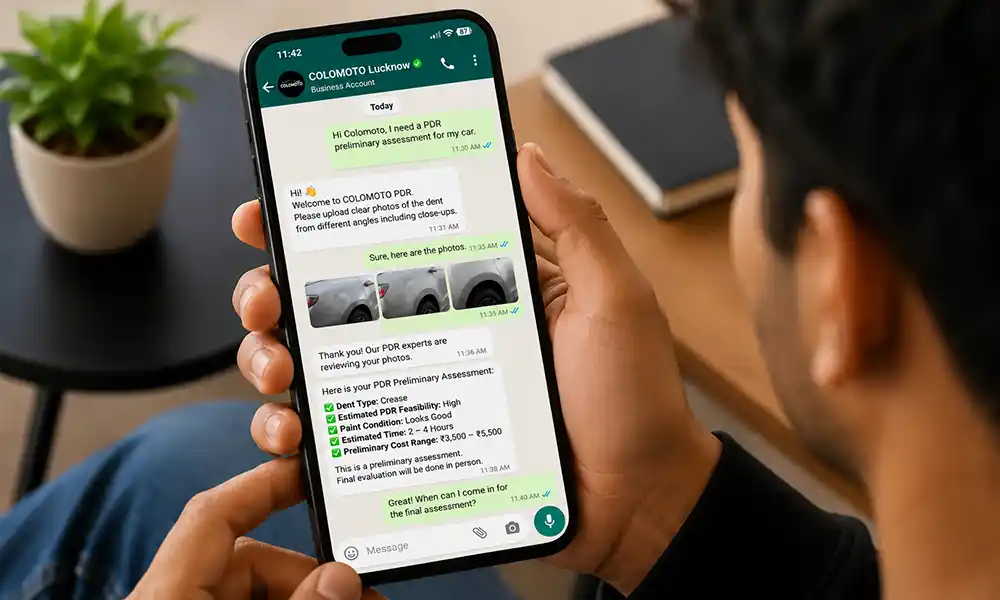
Send 4 photos of your dent via WhatsApp to +91 7388800192. We will classify the dent by severity, help you identify which of the 4 reader profiles you fit, and give you an honest DIY versus professional recommendation. If DIY is the right call for you, we will say so. If professional is the right call, we will explain why and quote the repair. Visit 323, Ahimamau, Sultanpur Road, Lucknow. Email info@colomoto.in.

